Weaving with light: The art of gilding
Set in the Oxfordshire countryside, our workshop and design studio is a living monument to British artistry and gilding our sculptures with 24-carat gold leaf is one of the many time-honoured techniques that reflect our commitment to craftsmanship.


Gilding is an endangered trade, as the number of artisans who still practice it are in rapid decline. Lost to an age enthralled by speed and efficiency, the brilliance of gilding as a vocation has been sidelined, but in the workshop this skill shines like a diamond in the rough world of manufacturing and watching a gilder in action is a beautiful thing.
Each delicate leaf of gold is placed by hand, its brilliance emerging through a ritual of patience, intuition, and inherited technique. The result is a unique finish interlaced with the authenticity of human touch – the essence of craftsmanship.
As the world’s gilders become fewer in number, their work grows ever more precious.

At David Harber, we are proud to work Shawn, a highly skilled, third-generation gilder who, through years of dedication, has perfected this artisanal craft to keep this traditional technique and his family’s rich heritage alive. Each brushstroke of gold foil is applied by hand with care and precision, transforming our sculptural forms into objects that radiate warmth, richness, and timeless sophistication.
The tradition started with his grandfather who discovered gilding while running his carpentry business. He passed the skill to Shawn’s father who made a living as a signwriter. When we asked Shawn to tell us how he took up the craft he said, ‘I became fascinated with the way gold could elevate an object, making it something of true value. I had the privilege of learning on the job with my father and went on to work with him for thirty years, honing a tradition that feels as much inherited as it is learned.’
Talking about the process itself, Shawn explains the power gilding has in reshaping how we might experience an object, ‘by highlighting its contours and textures, gilding serves as a finishing touch that enhances both form and material.’ He goes on to say, ‘despite its fragility, it carries an unmistakeable elegance.’
When we asked Shawn what he loves most about gilding, he describes the moment gold leaf glows in the sun, ‘it’s a light that feels almost alive.’


Adding gold as a decorative accent transcends creative disciplines. In England in the 12th century, the Opus Anglicanum weavers incorporated goldwork into precious fabrics and embroidery, teeming with elaborate imagery, for emperors, royalty and religious leaders to make sure the fabric had visual impact from afar. Cloth of gold is a luxury textile of woven gold thread and silk, famously reserved for medieval and Tudor kings. As well as a symbol of status and power, these fine threads of gold and silver wire stitched into place would catch the light in a such a way to create the impression that the wearer was touched with some divine light.
But it wasn’t only English craftsmen who had a fascination with metallic threads and embellishment, fabrics such as damask and brocade that originated in China are still used today for occasion wear and bridalwear. Not to mention the much-loved golden threads and sequins in modern festive designs.

In the David Harber Design Studio, gold makes its way into so many David Harber artworks because of its versatility and its unique ability to reveal and enhance.
Mantle II, Geminus and Quill, have core of gold. An internal glow. ‘Mantle II was the first piece I worked on when I started at David Harber’ says Shawn, ’I love the way the gold creates a magical effect both in the daytime when it catches the sunlight, and when it is illuminated at night.’

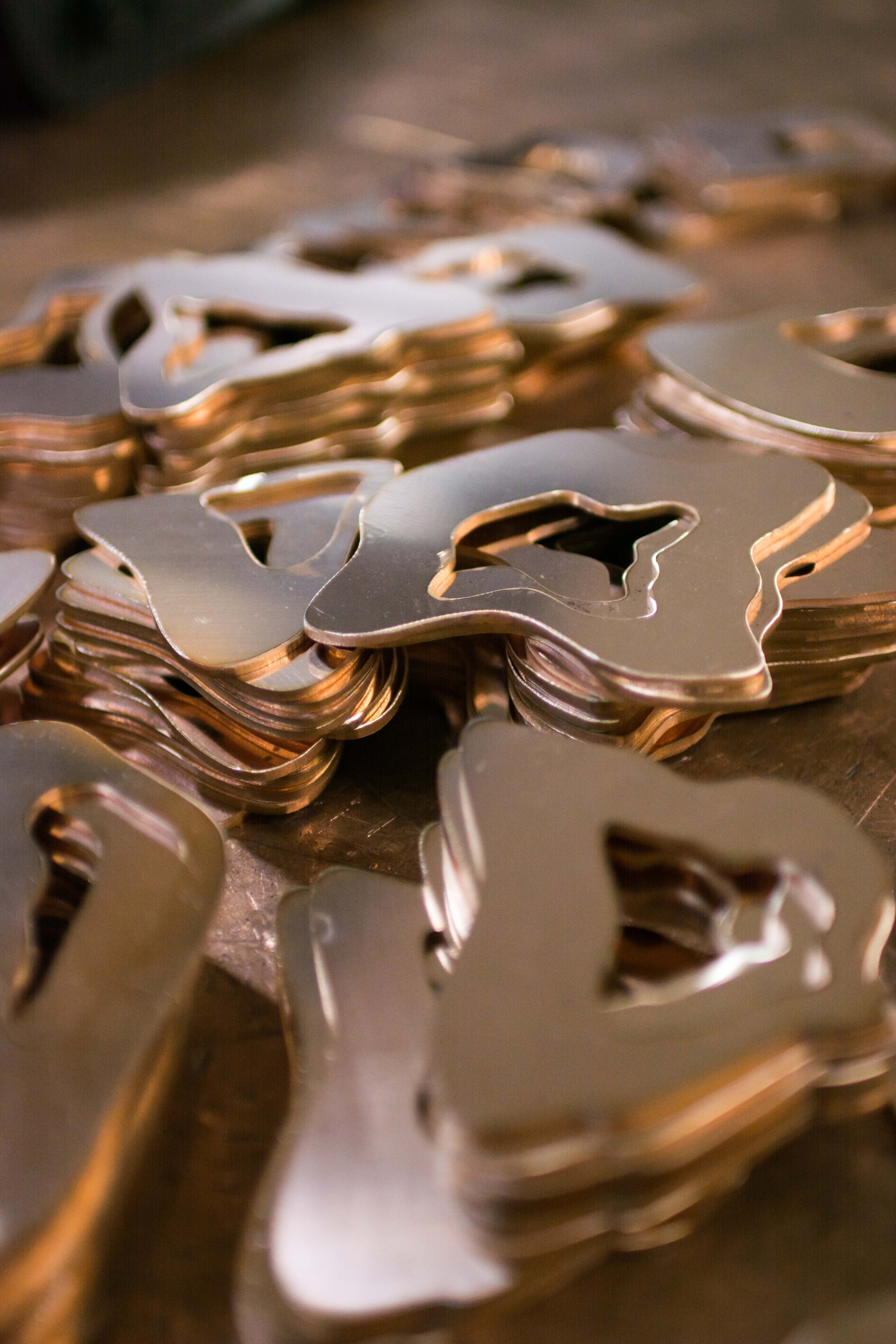
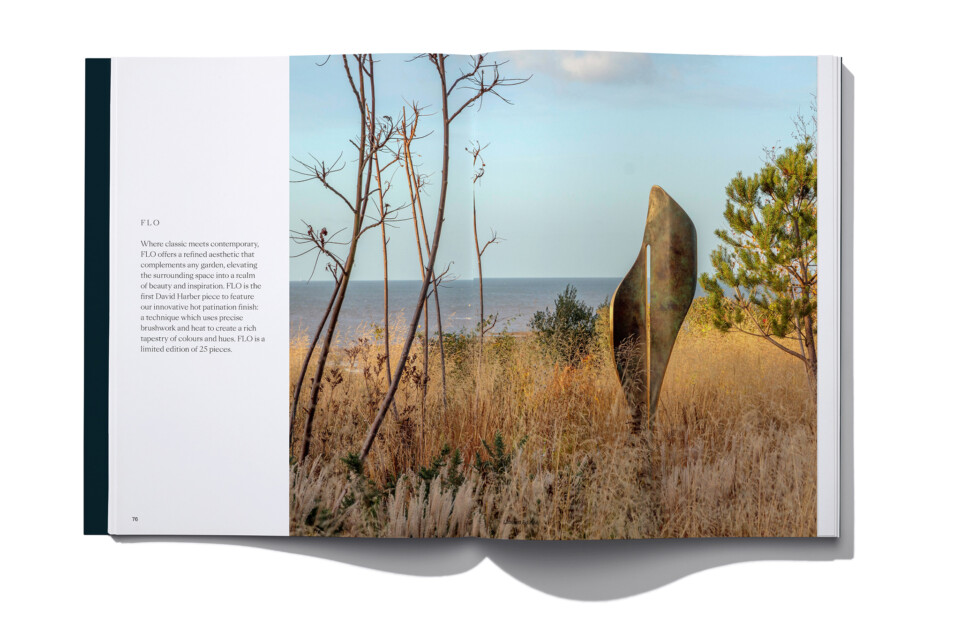
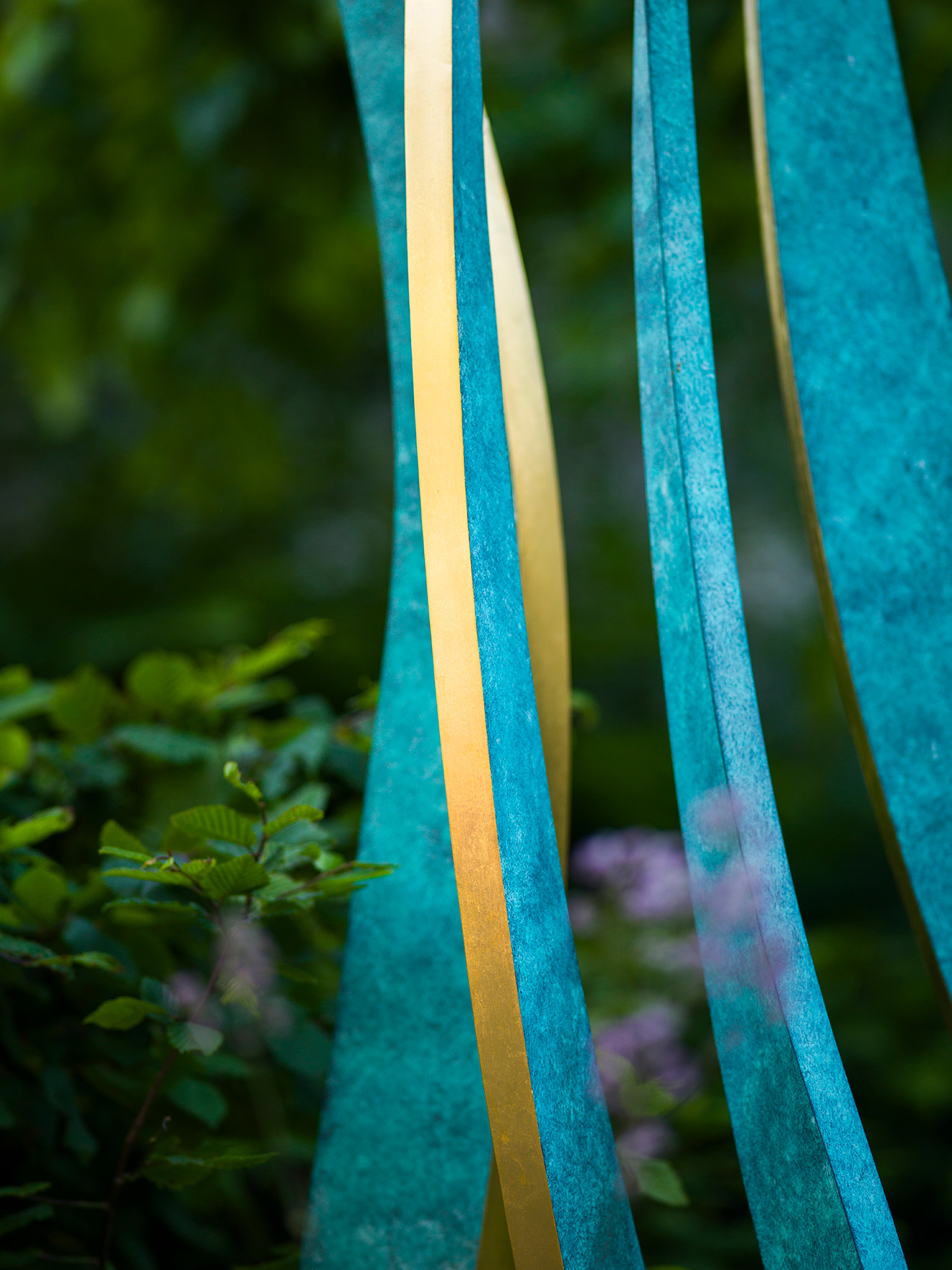
For a sculpture like Flo or Hydra, it’s about accentuating the form. Just the edge and the centre of the piece are gilded to add a subtle highlight that elevates the patination, and the contrast against the patinated surface brings the work to life.
Whichever piece this incredible technique is applied to the result is a radiant, custom piece that exudes refinement and opulence.


Get in touch
Whether you’ve decided on a piece or you just want to sound out an aspect of our work, please get in touch with our team to discuss your needs.