Formal Garden Design: Ideas for Bringing Order, Elegance and Timeless Style to Your Outdoor Space
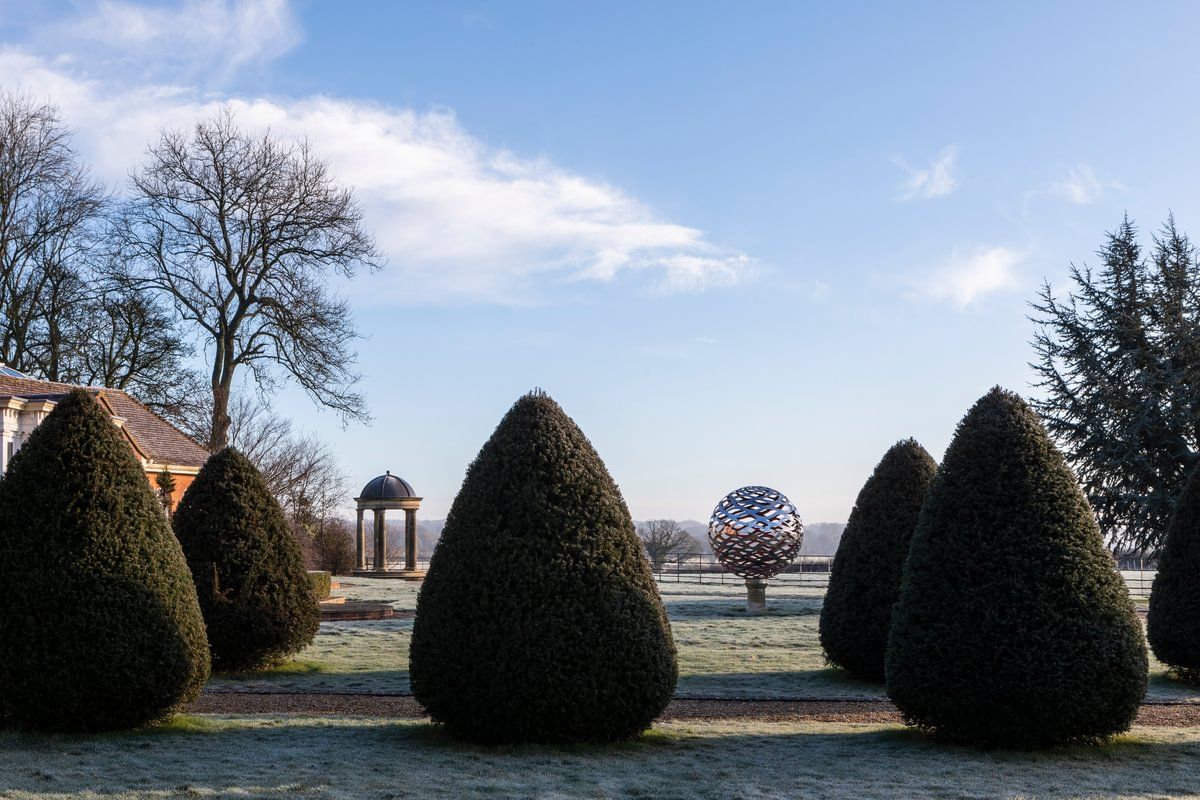
Formal garden design has a confidence few other styles can match. While we tend to picture it alongside historic houses, palaces and grand estates, its appeal reaches far beyond them.
The style originates in Persia and Egypt, where walls enclosed gardens in symmetrical, structured layouts. The walls did practical work, protecting precious plants from harsh winds, while water was channelled through geometric irrigation paths that gave the whole design its shape.
The Italian Renaissance reinstated the formal garden as a style to be admired, with ordered terraces, clipped evergreens and carefully framed views. It reached its peak in 17th-century French baroque, epitomised by the sheer scale of Versailles, where André Le Nôtre laid out avenues and canals that seem to run to the horizon.
Britain embraced the look with enthusiasm. The Privy Garden at Hampton Court Palace, restored to its 1702 design, is a glorious example of the formal tradition at its height.
Then, in the 18th century, fashion turned. Lancelot ‘Capability’ Brown and his contemporaries swept away many formal layouts in favour of rolling lawns, serpentine lakes and naturalistic planting, a nature-led approach that came to define the English landscape style.
But formality was never gone for long. The Victorians revived it with Italianate terraces, most famously through the architect Sir Charles Barry. Then the Arts and Crafts generation reimagined it for a new century: Sir Edwin Lutyens and Gertrude Jekyll at Hestercombe, Lawrence Johnston’s ‘garden rooms’ at Hidcote, and Vita Sackville-West and Harold Nicolson at Sissinghurst. Their gardens showed that strict structure and generous, romantic planting could be the very best of friends.
Today, the principles of formal garden design can be seen in gardens of every size, and if you love neat, clean edges and you’re not especially horticulturally motivated, this is a style that will work beautifully for you. Some maintenance is required, but it is largely clipping and tending hedges, a rhythm of regular care rather than constant effort.
A handful of key features are worth understanding, because together they are the secret to an elegant, enduring outdoor space.
What is considered a formal garden?
A formal garden is, above all, an ordered one. It is the epitome of a manipulated garden space, where every hedge, path and plant has been placed with intent and nothing is left to wander. There is no wildness here; the plants are shaped to the design, rather than the design following the plants.
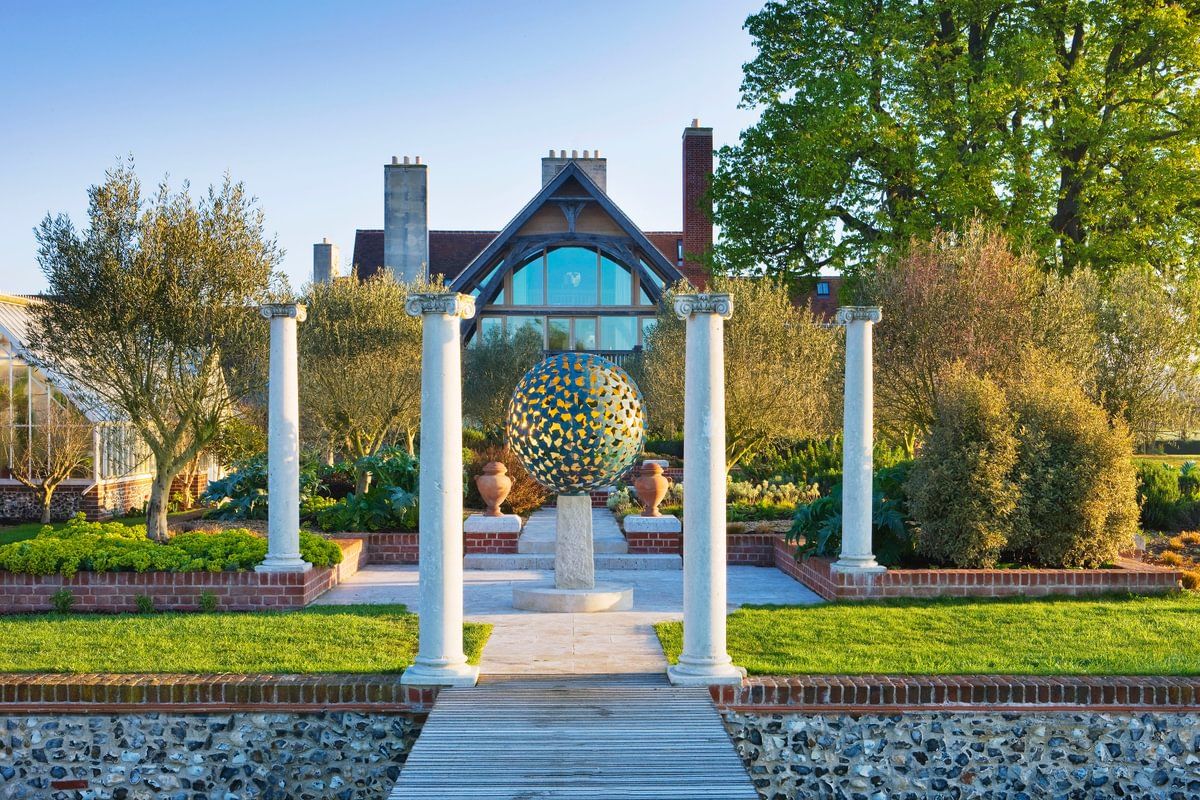
A grand house is naturally complemented by a formal garden, and the two were often conceived together, the geometry of the house carrying on into the lawns, terraces and avenues around it. Think of the water terraces at Blenheim Palace, the yew-lined terraces at Powis Castle or the clipped topiary of Levens Hall in Cumbria, where the figures have been shaped and tended since the 1690s.
Yet the heart of the style is not size or grandeur. It is clarity of structure, and that is something any garden can have.
What are the benefits of a formal garden design?
Formal gardens have lasted for centuries for good reason. Beyond their beauty, they are remarkably practical.
- They hold their own all year round. Because the garden is built on structure (hedges, evergreens, paths and clean lines) rather than on flowers alone, it looks composed even in the depths of a British winter.
- They have a clear design style that is easy to stay true to. With a defined set of principles to follow, it is far easier to know what belongs in the garden, and what doesn’t.
- Maintenance is predictable and seasonal. The work is largely hedge clipping, mowing and raking, and keeping edges crisp. There is very little in the way of fiddly gardening: no endless rearranging of annuals and very little deadheading.
- They are timeless. A formal garden never goes out of fashion. The same design that delighted visitors in the seventeenth century looks just as striking today.
For anyone who wants a beautiful garden without a never-ending to-do list, that combination is hard to beat.
What are some design principles for creating a formal garden?
Behind every great formal garden sit a few simple principles. Keep them in mind as you plan and the details tend to fall into place.
Unity: every part of the garden should feel as though it belongs to the same whole, with materials, shapes and plants speaking the same language.
Balance: visual weight should be evenly distributed, so that no one area overpowers the rest.
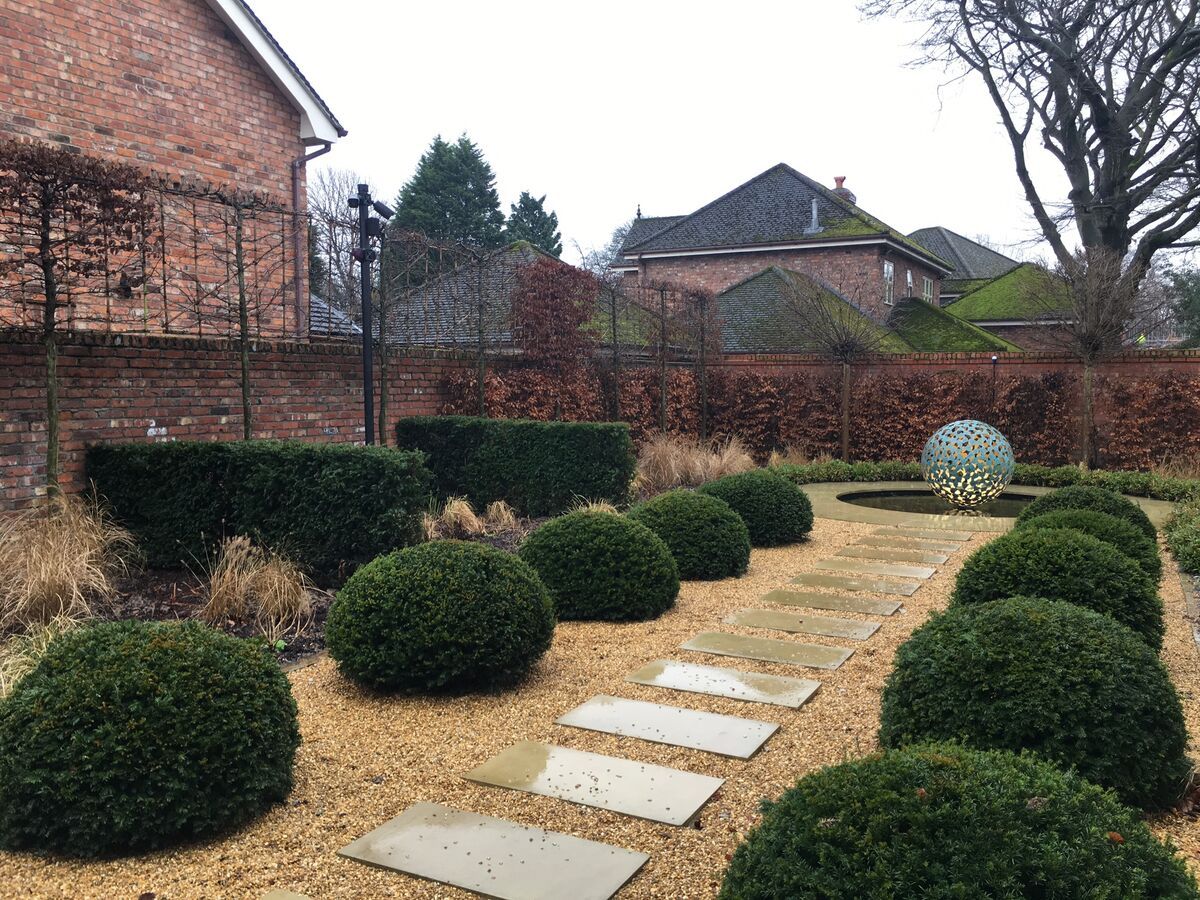
Symmetry: one half of the garden mirrors the other along the central axis
Proportion: the relationship between the size of the elements (the width of a path to the height of a hedge, a pond to the lawn around it) is what makes a space feel right. The rule of thirds is a useful guide: dividing a space or a view into thirds often produces more pleasing proportions than halves.
Repetition: repeating the same shapes, plants and materials creates rhythm and reinforces the sense of order.
What are the key elements of a formal garden design?
We asked Claire Greenslade, former Head Gardener at Hestercombe to share her thoughts on what the key elements of a formal garden design are. She said, ‘start by thinking about the structure, the bones of the garden. A formal garden has a clear, thought-out layout of paths, lawns and hedges, often used to guide the visitor gently around the space. Everything else is built on that framework.’
Geometric shapes and straight lines
Formal gardens are built from well-defined, recognisable shapes (squares, rectangles, circles) that are repeated throughout the space. There are no meandering curves or organic forms here; the lines are deliberate and clean, and they give the garden its calm, confident character.
Mirroring and a strong axis
Mirroring is the heartbeat of the style: one side of the garden echoes the other. It is usually organised around a strong central axis, often a main cross of paths with others radiating off it, which draws the eye along a view and gives the garden its sense of direction.
Garden rooms
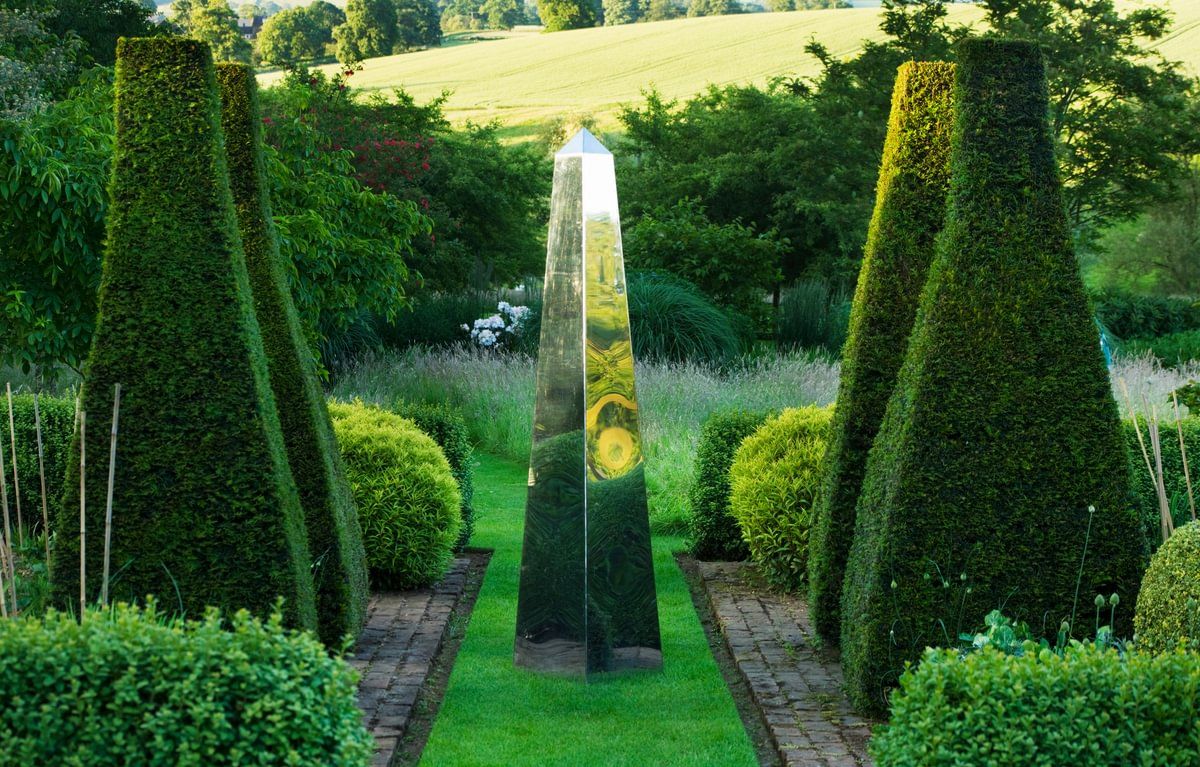
Larger areas spur off into smaller garden rooms, a device Hidcote Manor Garden in Gloucestershire made famous. Different parts of the garden are often the same shape and size, but they can be divided in a way that stays balanced, such as a pattern with repetition like a parterre. The result is a garden that unfolds gradually as you move through it.
A restrained plant and colour palette
Restraint is the secret ingredient. Limit the number of plant species and repeat them symmetrically. Choose two or three colours and stay loyal to those shades: white, purple and pink, or simply white and green are reliable combinations. You will rarely see fiery, bold reds, oranges or yellows in a formal garden. The famous White Garden at Sissinghurst shows just how powerful a single colour can be.
Key focal points
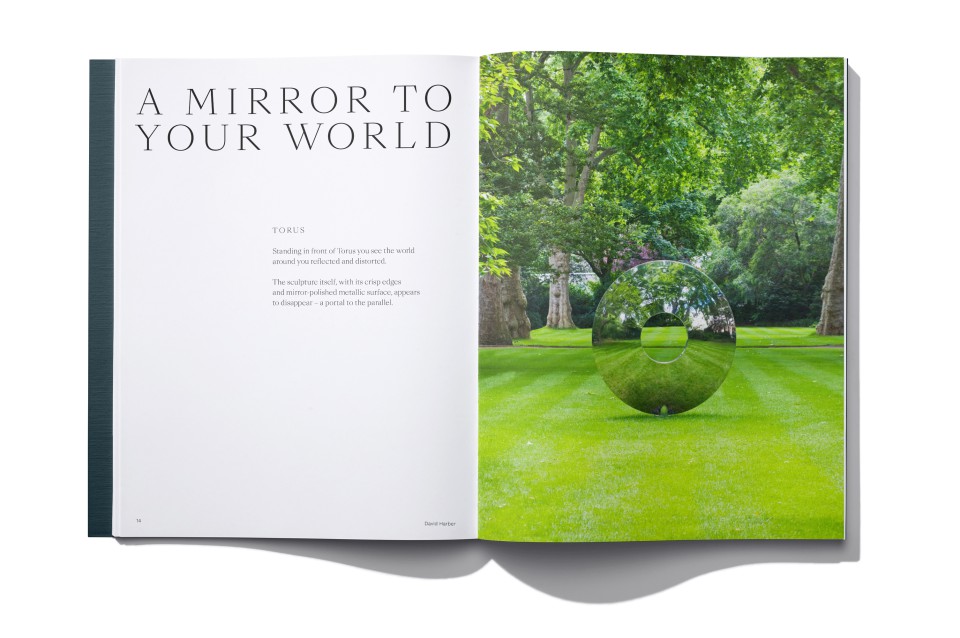
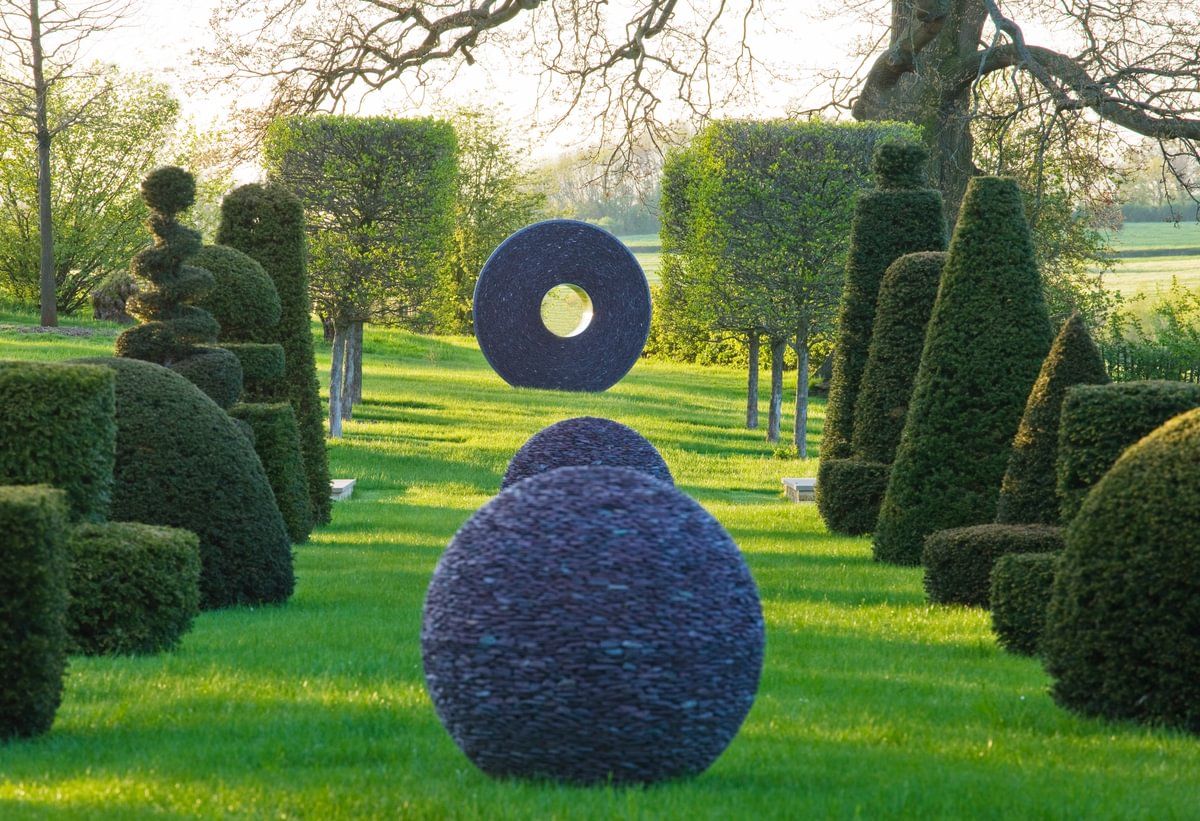
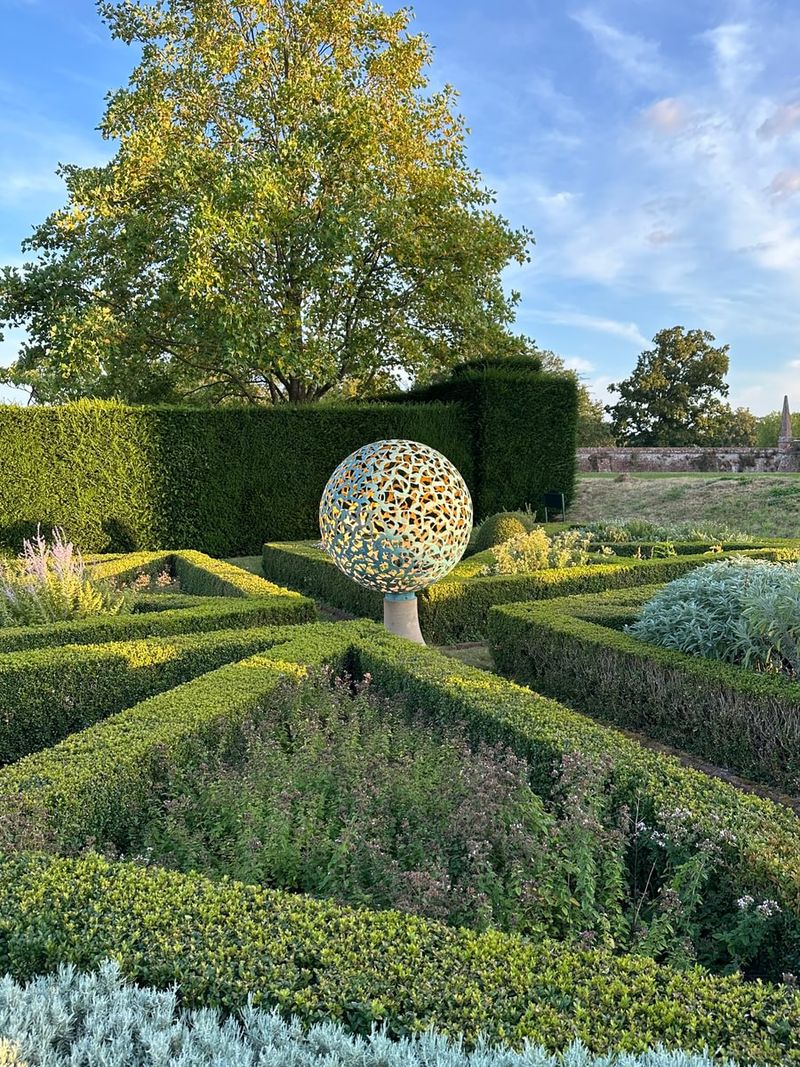
Every formal garden gives the eye somewhere to go. Focal points are generally strong and over-scaled, big and bold enough to draw you in, and each room you move through should hold something that demands your interest, whether a statue, an urn, a specimen tree or fountain.
Water
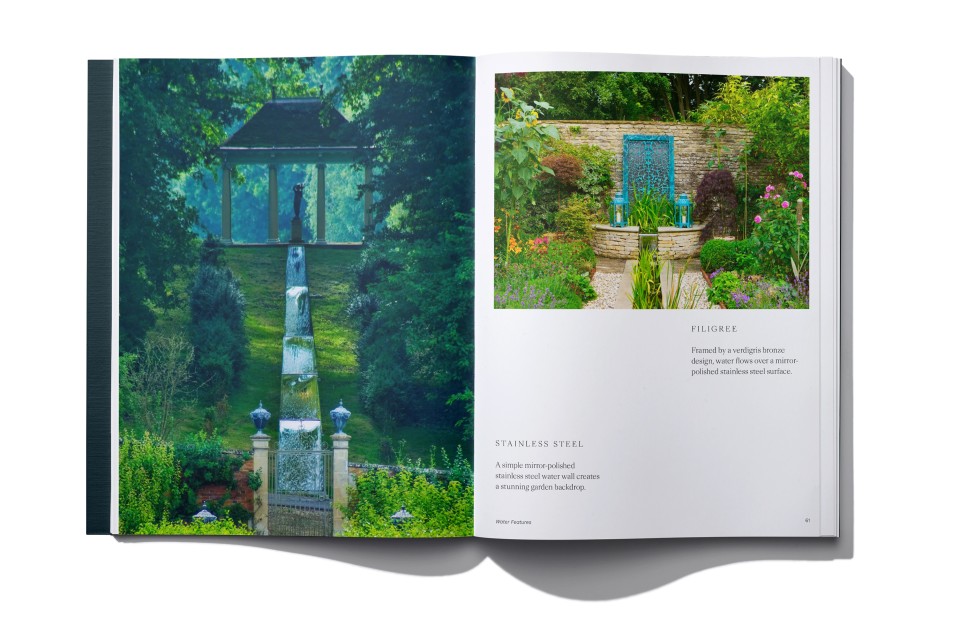
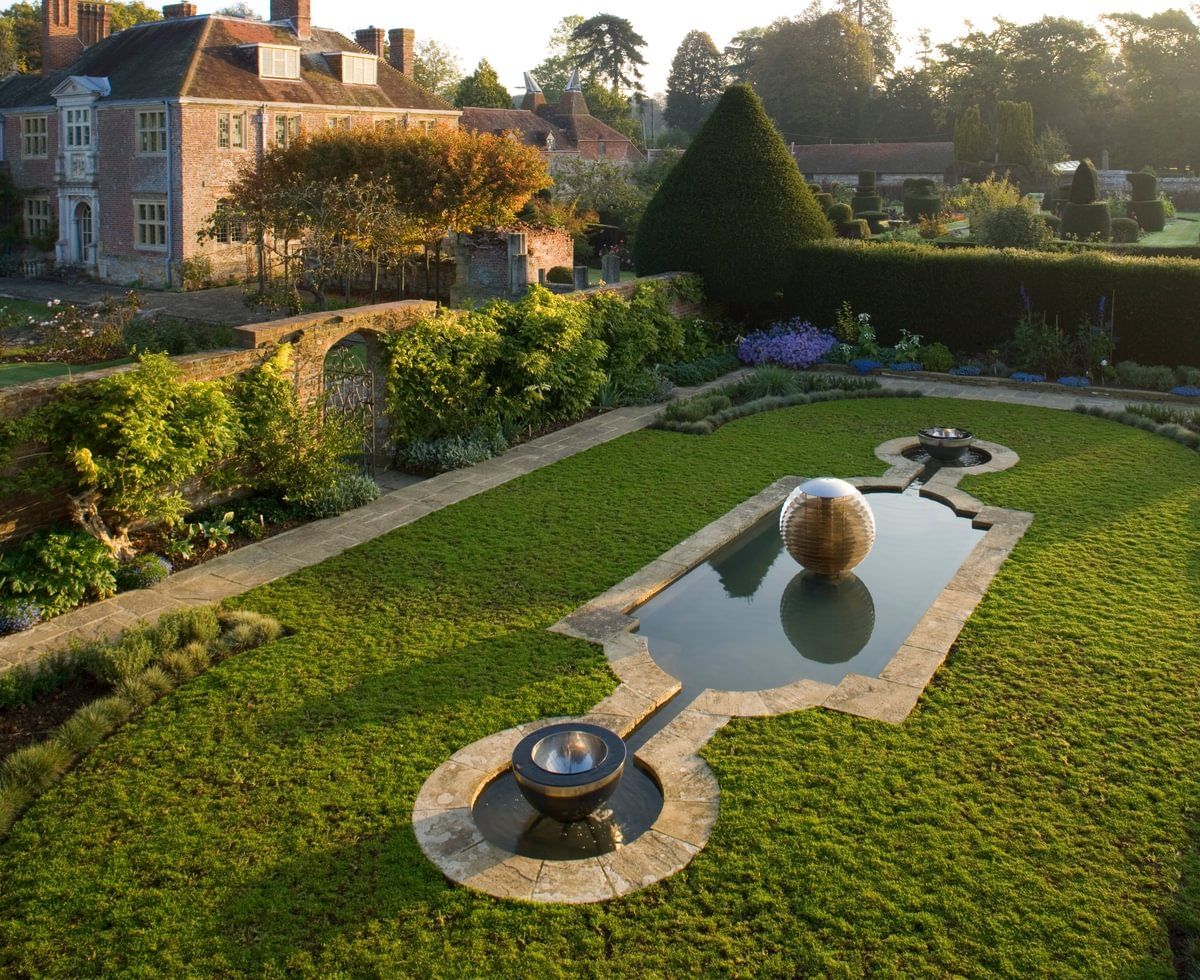
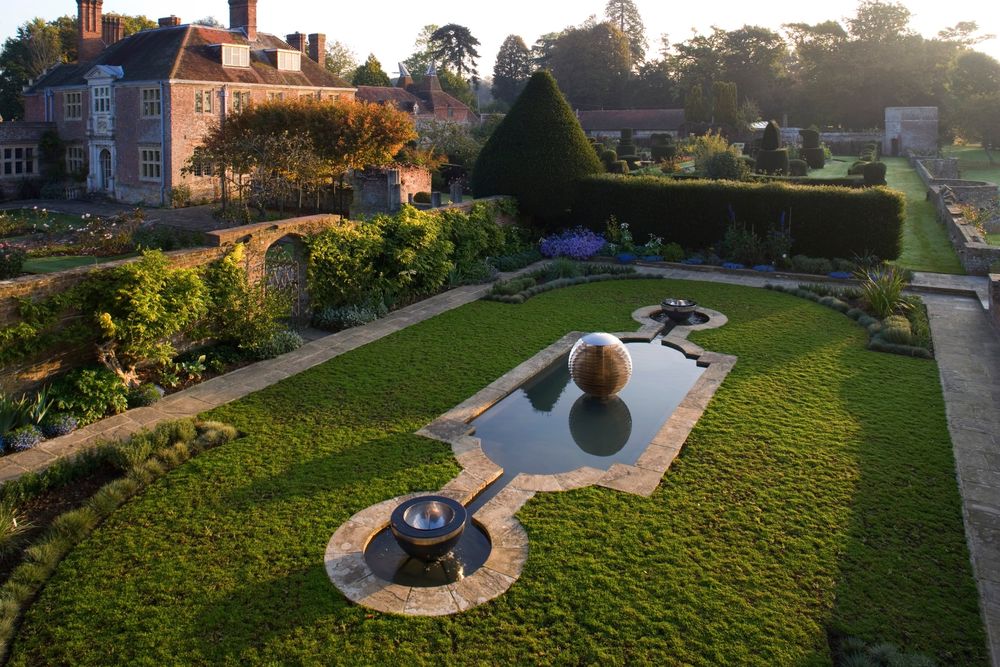
Water is one of the great glories of formal design. It softens sharp lines and sits at the centre of the symmetry, often on the main axis. A plant-free reflection pond with clean, straight edges is a classic choice, as are stone or tiered fountains which sometimes sit in the centre of the pond or pool to add drama and romance to what is already a strong focal point.
Traditionally, formal gardens often had a lake or stream because they were built alongside waterways, and the water became part of the overall design. Westbury Court Garden in Gloucestershire, with its canals and clipped yew, is a lovely example.

What plants are best suited for a formal garden?
The guiding rule is restraint. Choose a limited plant palette and deliberately repeat it in beds that are symmetrical. Stick to reliable evergreen shrubs, perennials and bulbs: once you have done the hard work of choosing your palette, you know the plants will come back again and again.
Hedging
Hedges are the walls of your garden rooms, so frame them generously. A hedge above eye-line creates a real sense of enclosure and makes each room feel like a discovery.
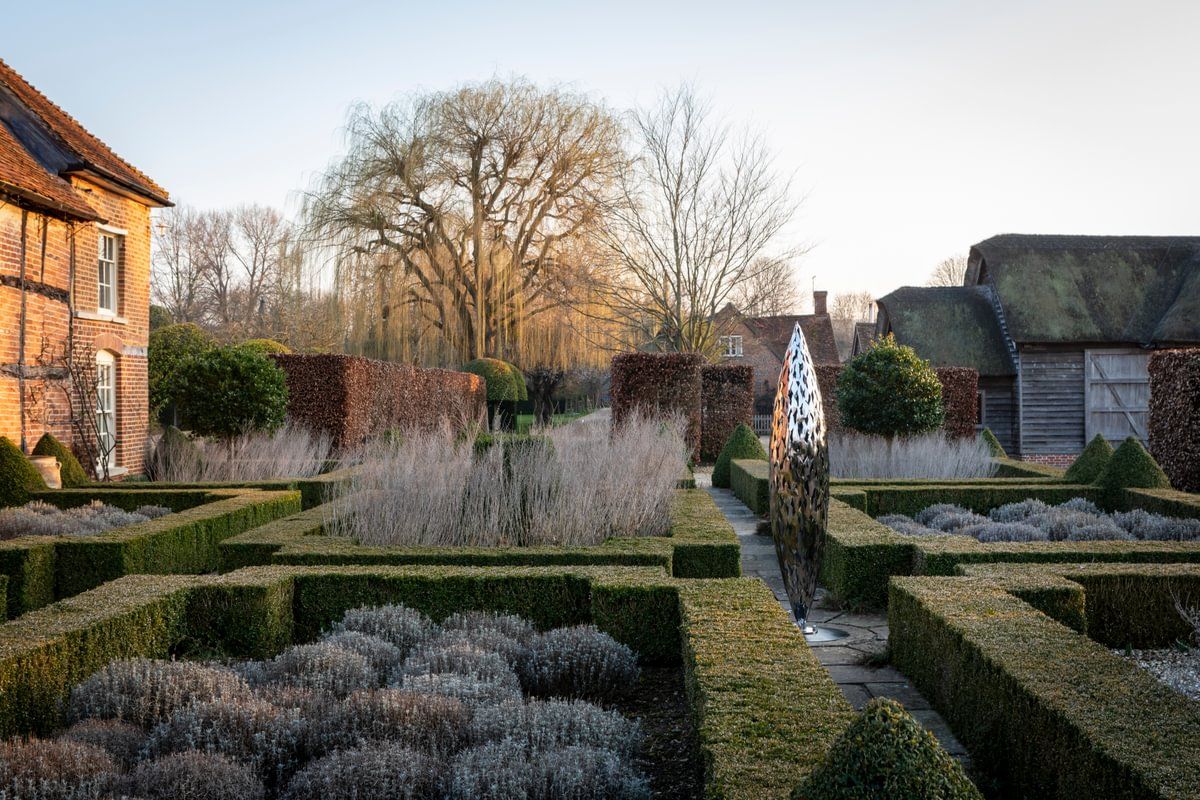
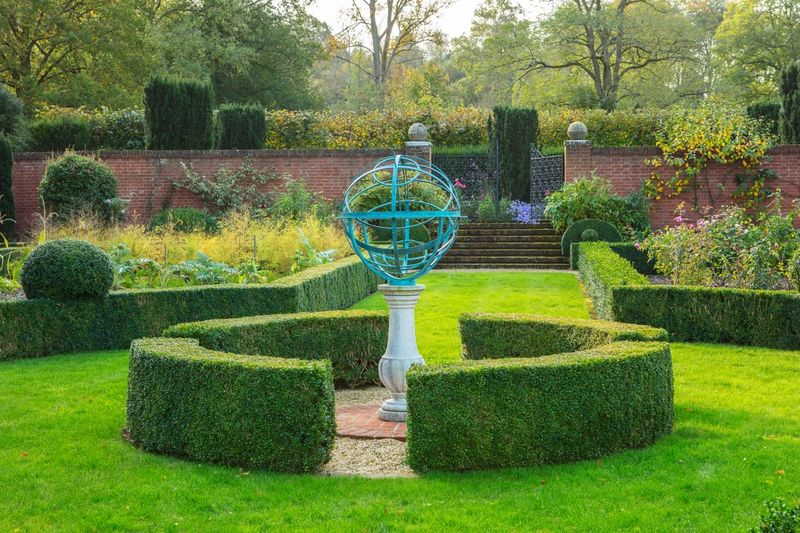
- Layer your hedging. Pair taller hedges with a lower clipped hedge bordering the flower beds. Box (Buxus sempervirens) is the traditional choice, though euonymus and other small-leaved evergreens also work well. What matters is a plant that clips really well, and the clipping is usually done in a clean rectangular shape or smart ball. Box blight and box tree moth have made box a riskier choice in many UK gardens, so yew, Japanese holly (Ilex crenata) and Lonicera nitida are worth considering.
- Choose small-leaved varieties. Large-leaved hedging plants end up with half-cut leaves that turn brown and become unattractive after clipping. Small leaves give a far crisper finish.
- Add topiary. Shaped hedging can double as a focal point and mix in with your layered hedging approach. Clipped balls and cones look wonderful on the corners of a formal box-edged border or when planted in groups of three or five. Shaped hornbeam or beech are popular choices because of their coppery autumn colour. Great Dixter in East Sussex and Levens Hall both show what well-kept topiary can do.
Trees
Trees give a formal garden its height and its sense of permanence. Always be mindful of the space available to you and the suitability of the tree in that space. Note the tree’s mature height before making a purchase. Good choices include:
- Big, classic deciduous trees such as oak, which bring wonderful autumn colour. Elms were once the classic choice, but Dutch elm disease has made them difficult, so look for resistant cultivars or alternatives such as lime and hornbeam.
- Columnar trees such as pencil-slim conifers and fastigiate yews (Taxus baccata), which add vertical accents and punctuate a view.
- Bay trees, clipped into standards or balls and often planted in pairs either side of a doorway or path.
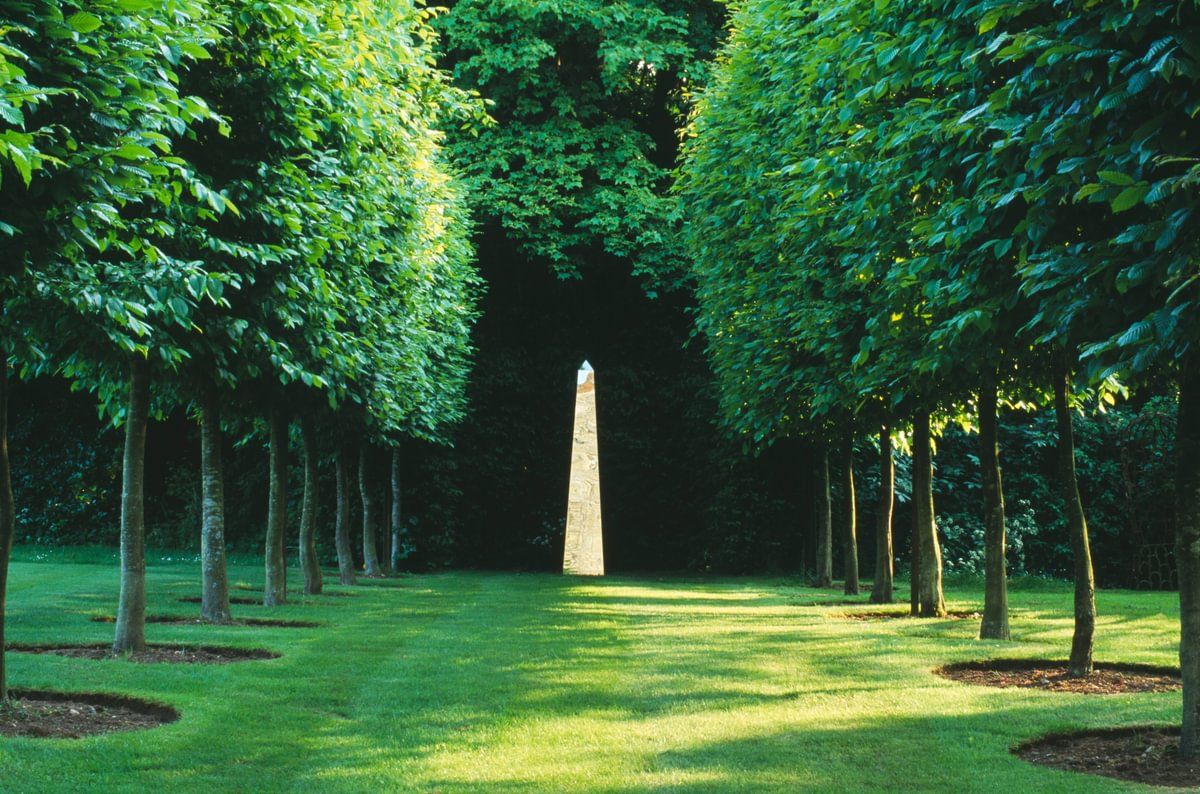
- Trained forms such as pollarded, espaliered and pleached trees, which create the green screens and ‘hedges on stilts’ that are so characteristic of the style.
Whichever you choose, repeat your trees in a neat, structured pattern. The rhythm matters as much as the species.
Roses
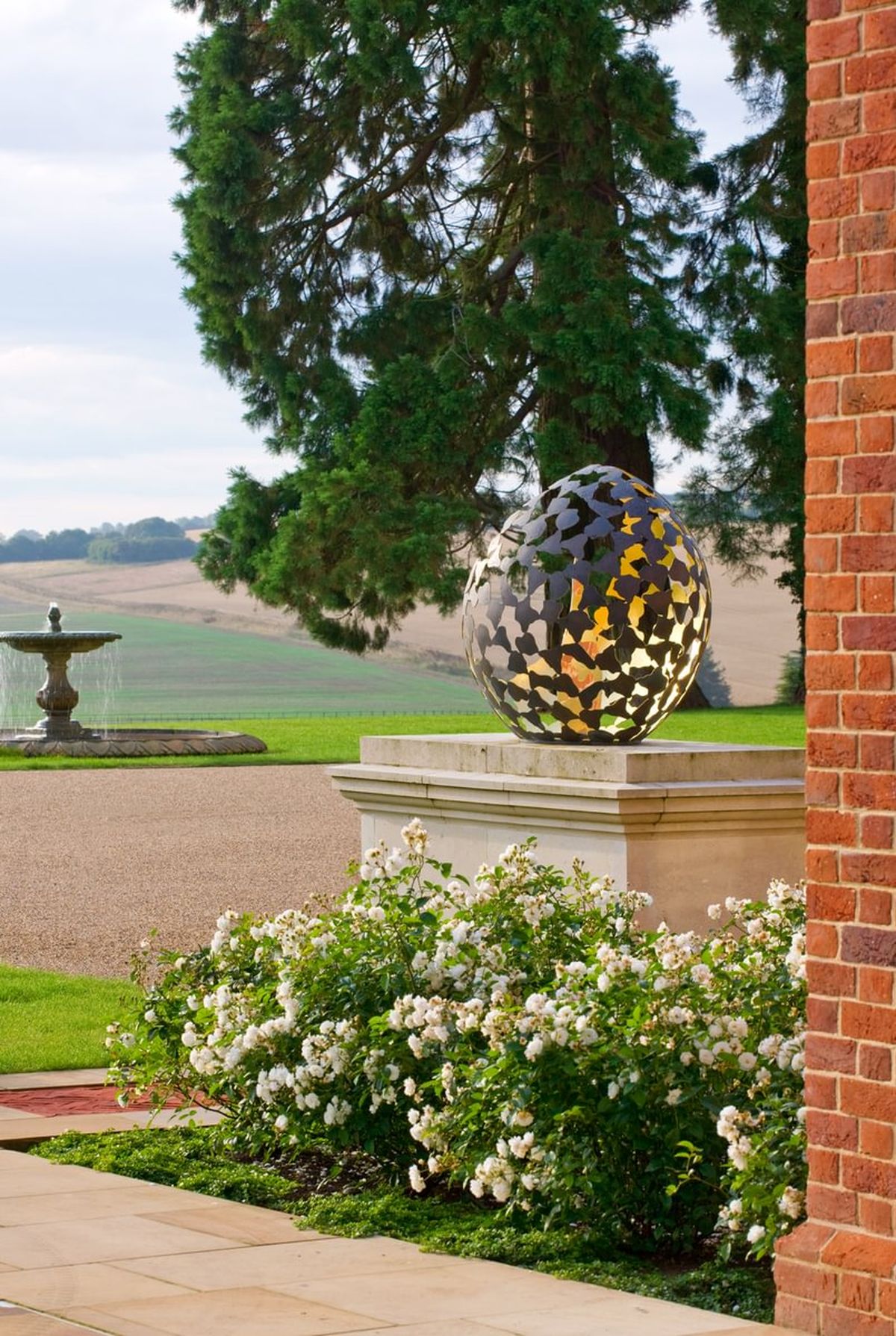
Shrub roses clipped into a round standard add softness and scent without loosening the structure. Planted in a repeating pattern or used as a focal point within bedding, they sit comfortably within the formal framework. Adding a climbing rose to an arbour or arch will soften the look and introduce a more romantic feel without straying too far from the design style.
Flowering shrubs
Reliable flowering evergreen shrubs are a great way to include structural plants that provide interest all year round. Lavender and Hydrangeas are elegant, traditional choices and look effective when planted en mass as they stay in keeping with the rule of restrained plant palette and colour palette.
One last note on planting
Mirror the style of formal garden designs but make sure you make the right plant choices for your own climate and soil. Don’t be tempted to replicate a garden from those you see in magazines or on Pinterest without doing your research first, as the plants may simply not thrive in your conditions. A little local knowledge goes a long way, and this is where some expert help might save you money in the long term.
What hard landscaping should I use in a formal garden?
If plants are the garden’s clothing, hardscaping is its skeleton. In a formal garden it does a great deal of the talking.
Materials
- Natural stone for paving and walls gives a timeless, grounded look that ages beautifully.
- Primary garden paths are usually stone pavers, gravel or pebble, which makes the main axis feel important.
- Neat edges keep everything crisp. Metal edging or brick pavers confine paths and beds in a clean line.
Structures
Greenhouses: attractive and elegant, and often built on a brick base, they can be as much a feature as a working building.
- Stone colonnades: a series of pillars with no real role other than to frame views, which is precisely their charm.
- Arbours, arches and pergolas: timber or galvanised steel, ideally for walking through under a cascade of wisteria.
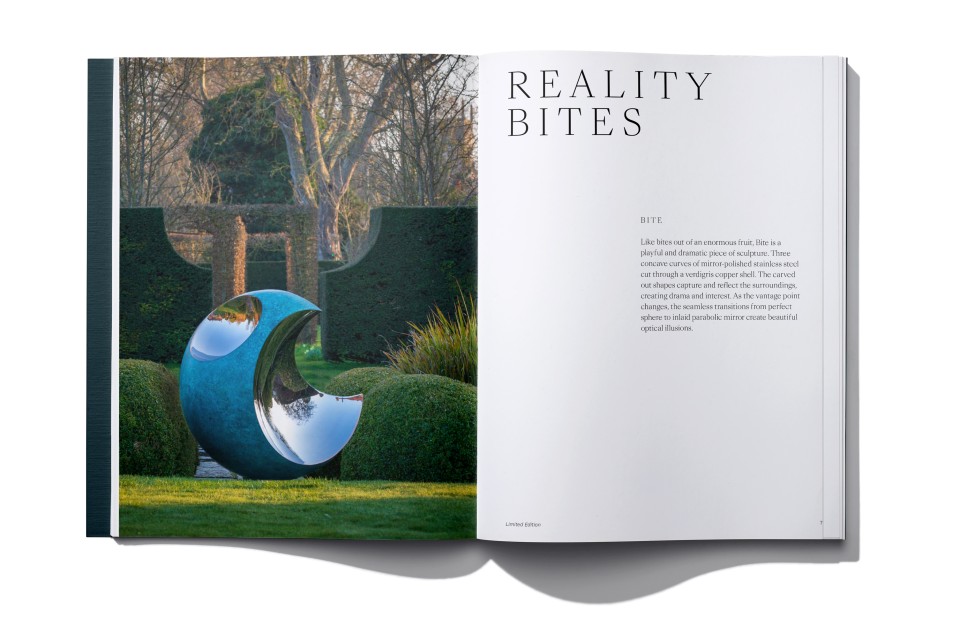
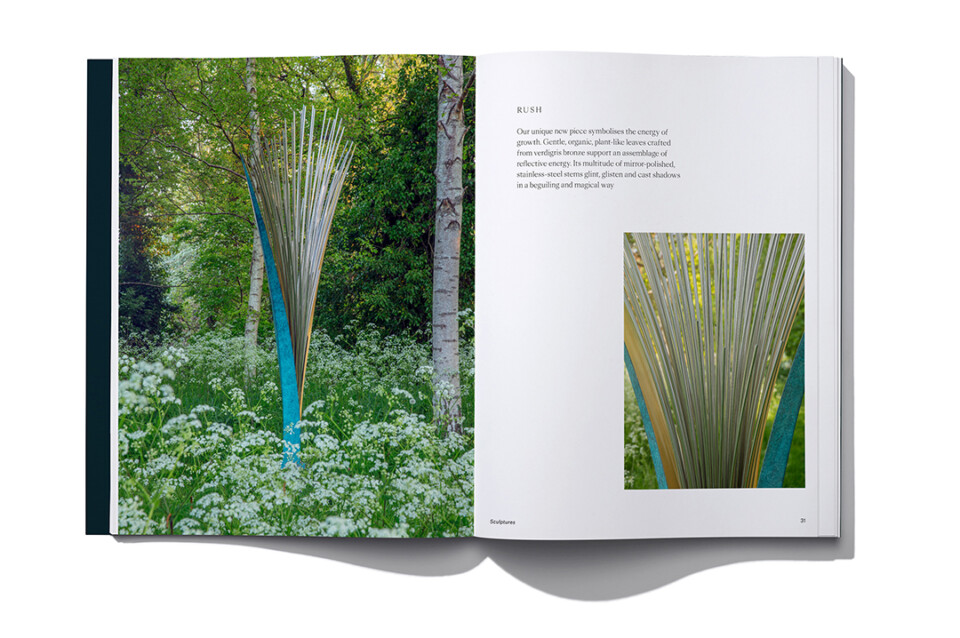
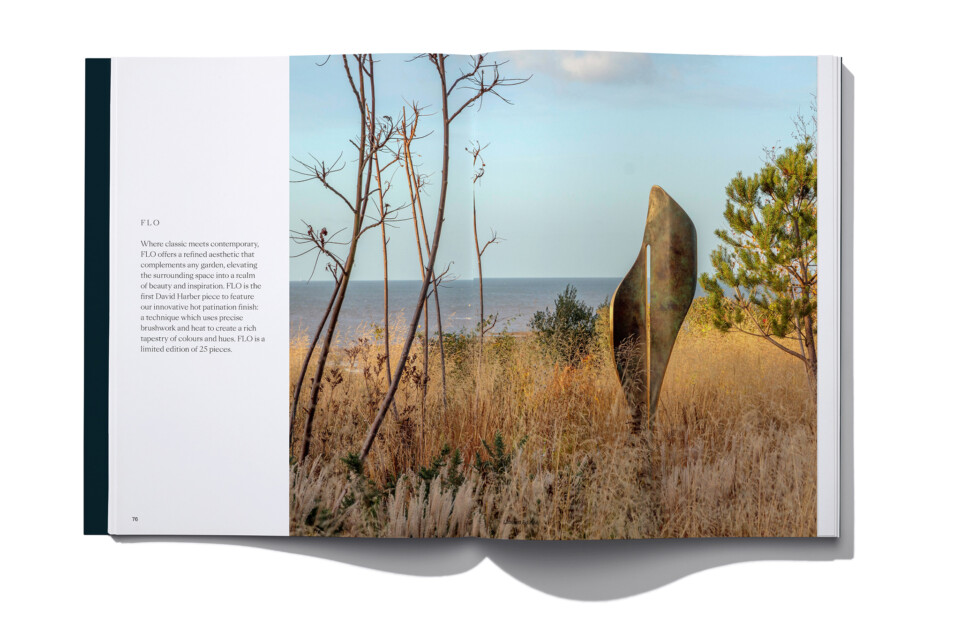
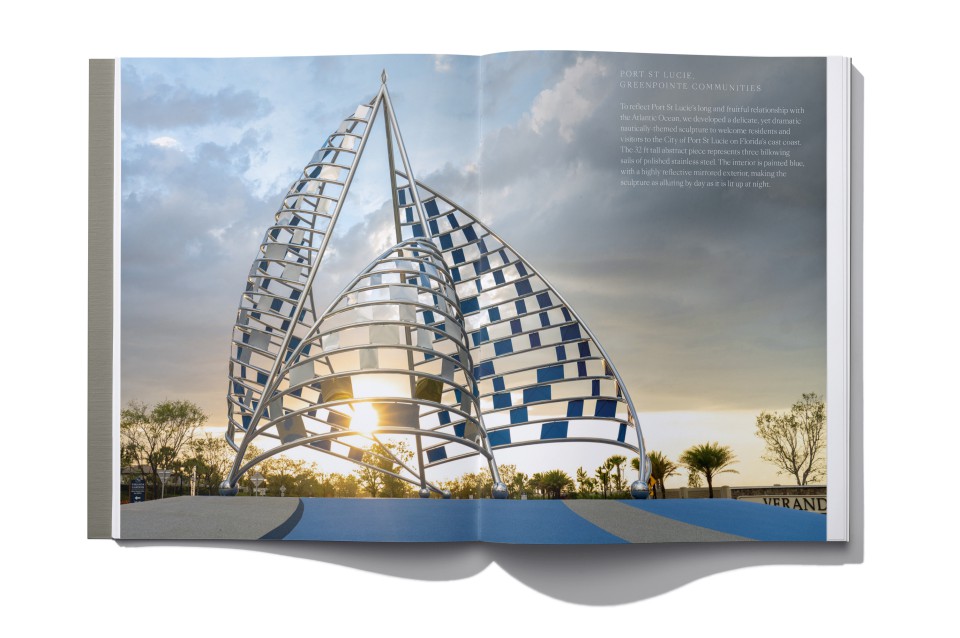
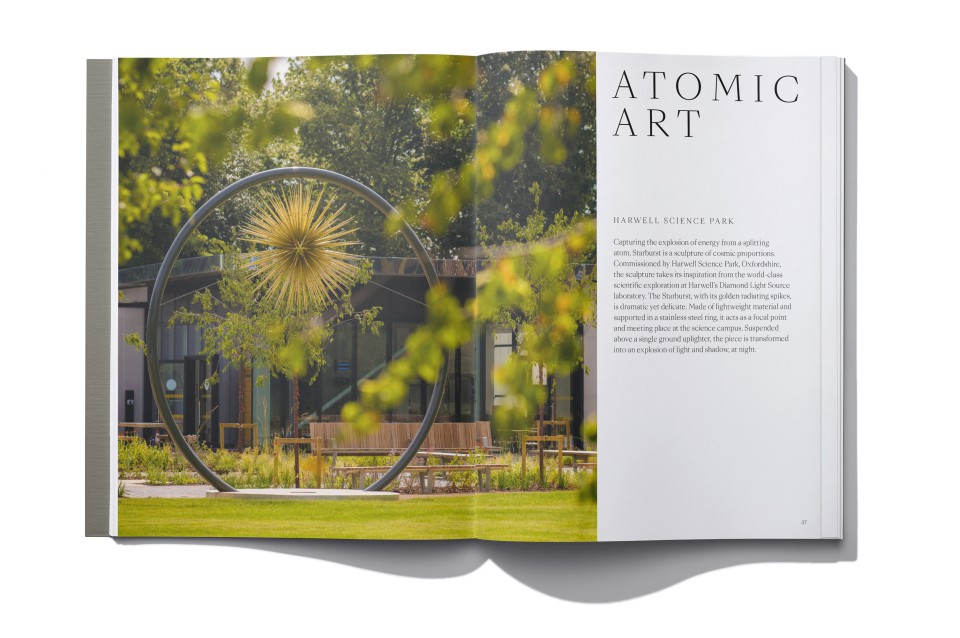
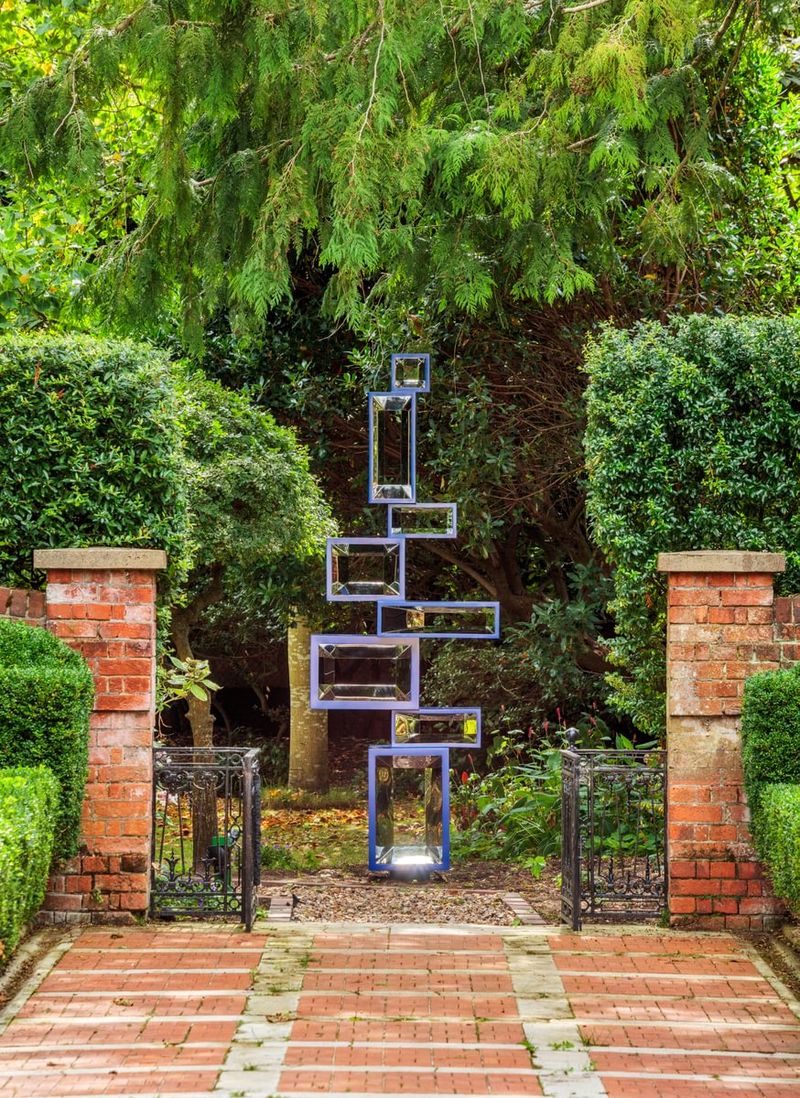
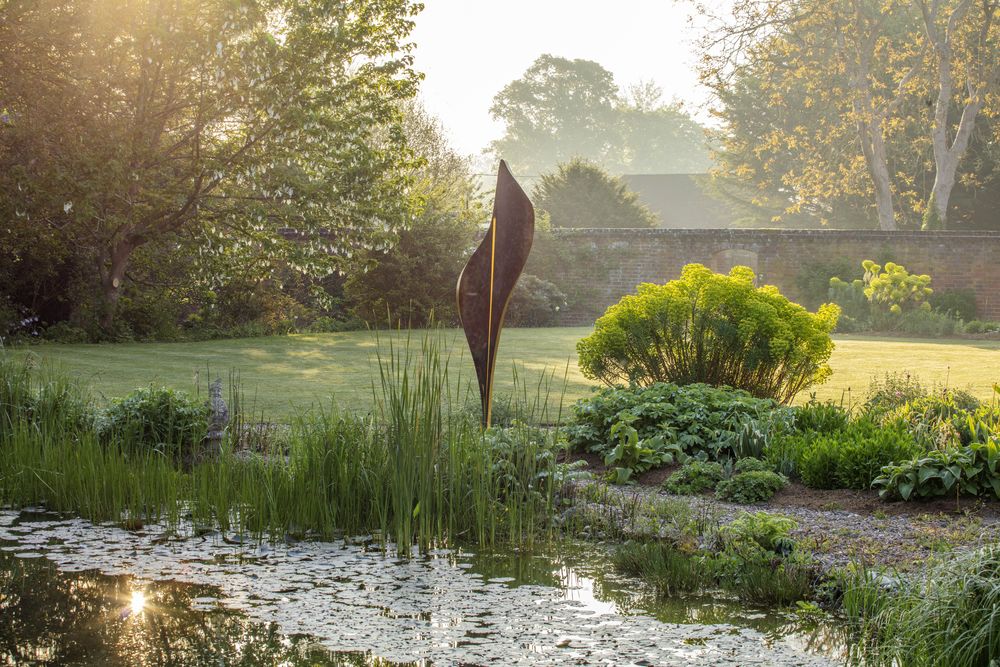
- Sculpture: with a nod to history rather than abstract, and always recognisable. Geometric, ball-like forms work well, as do materials such as bronze and stone that weather and develop a patina. Large urns and anything set on a plinth feel at home.
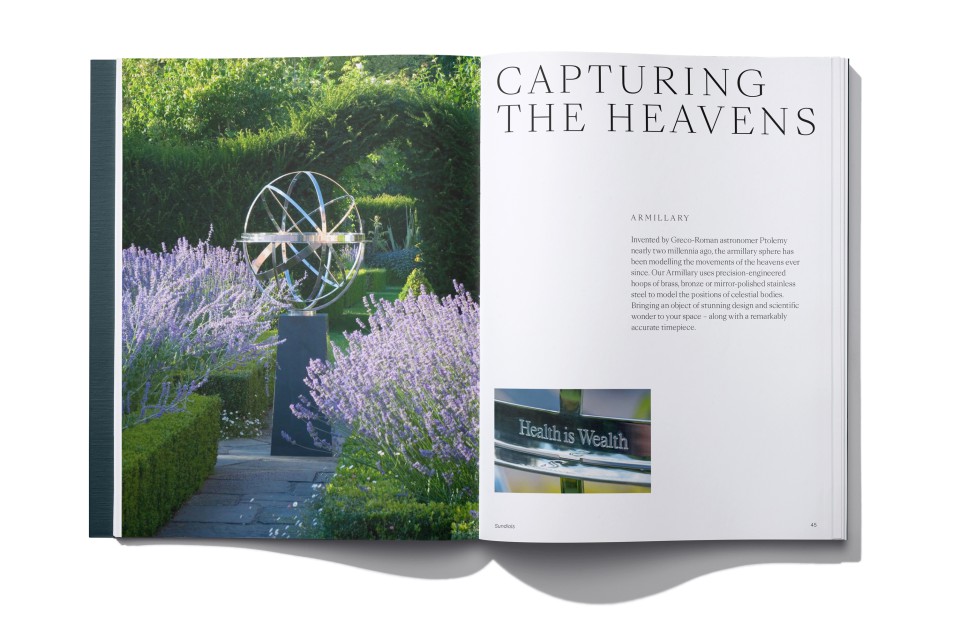
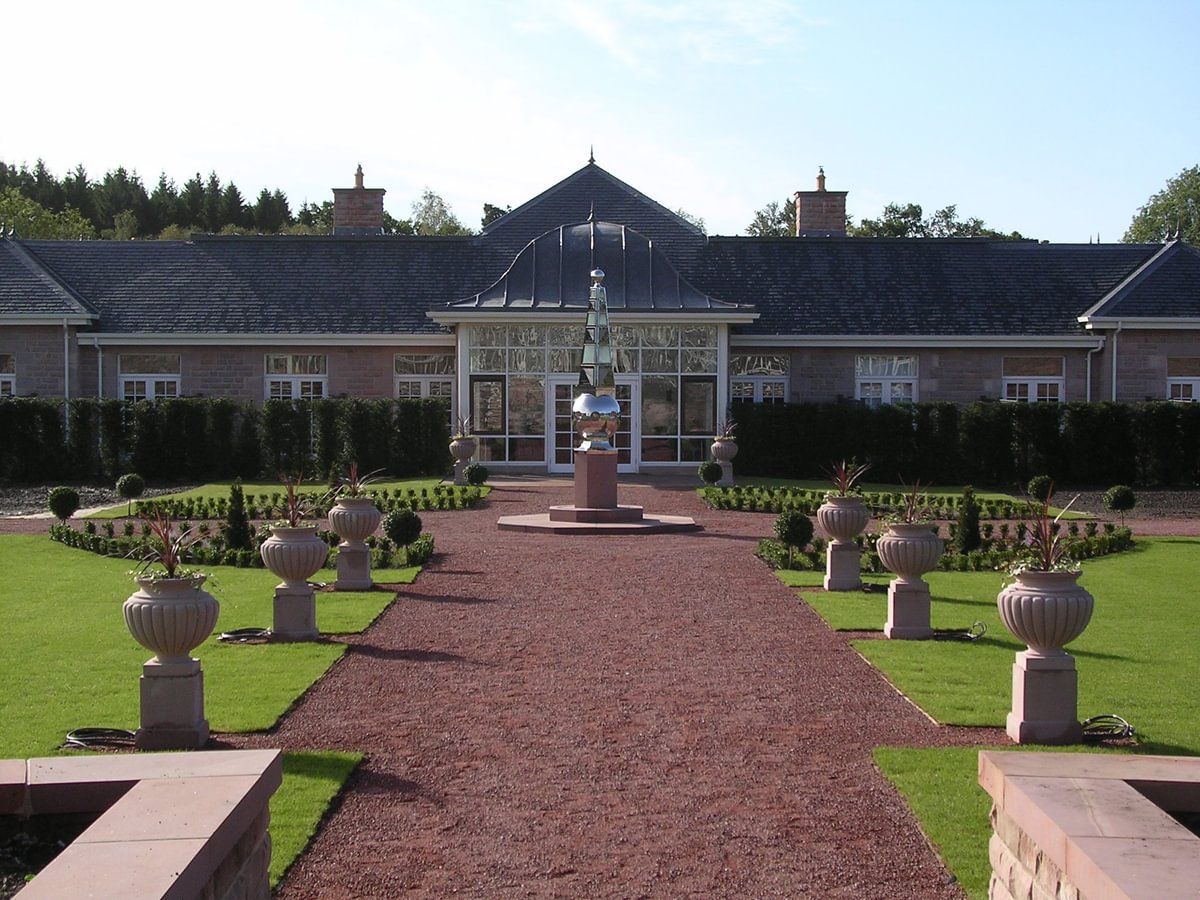
- Sundials: beautifully placed at the centre of an axis, they draw the eye and add interest and intrigue into the garden.
- Wrought iron gates and furniture: these add elegance and a sense of craftsmanship.
Finally, think about lighting. Lighting these features makes it clear that you intend them to be seen, and it extends the garden’s drama into the evening.
Can formal garden design work in a small garden?
Absolutely. You don’t need acres, or even a large lawn, to borrow from the formal tradition. Elements of the style adapt beautifully to a smaller space, and a single well-chosen feature can change the whole feel of a garden.
The easiest place to begin is with a focal point, something to draw the eye and give the space a purpose. It might be a sculpture on a plinth, a small water feature or a carefully placed tree. Position it on a clear axis, perhaps at the end of a straight path or centred on the view from your back door, and the garden immediately gains a sense of order.
From there, you can add as much formality as the space allows: a pair of clipped bay trees either side of a door, a low hedge to define a border, or a simple repeated planting pattern. Even a courtyard can feel graceful when it is symmetrical, restrained and gifted a strong focal point.
What can go wrong when trying this style?
Formal design is generous to those who respect it, but it has a few pitfalls worth knowing about before you begin.
- Getting your proportions wrong. This is what will pull a formal garden down faster than anything else. Spend time getting the proportions right (path widths, hedge heights, the size of each room in relation to the whole) and the rest will slot into place. Marking out the layout with canes and string, or even chalk paint, before you commit is time well spent.
- Dilution. Formal garden design is a disciplined style, so apply the principles in their true form. A half-hearted version, with a symmetrical layout but a scattering of unrelated plants, rarely satisfies.
- Struggling with restraint. The discipline required can be hard, especially for keen gardeners. You can’t get excited and plant something random and new on a whim. But the reward is worth it: remove any clutter and competing colours, and you will end up with a tranquil, fairly low-maintenance space.
If you’re considering a formal design for your garden, the best way to find your feet is to see the style in person. Visit some of the gardens mentioned here and take notes on what draws your eye. Then think about the design principles and how you could apply them to your own space, however modest it might be.
Remember, formal garden design isn’t reserved for stately homes. With careful thought and consideration at the start, a clear axis, a restrained palette, a well-judged focal point and good proportions, you can create something elegant and enduring. You could have a mini-Versailles in your back garden.
Get in touch
Whether you’ve decided on a piece or you just want to sound out an aspect of our work, please get in touch with our team to discuss your needs.